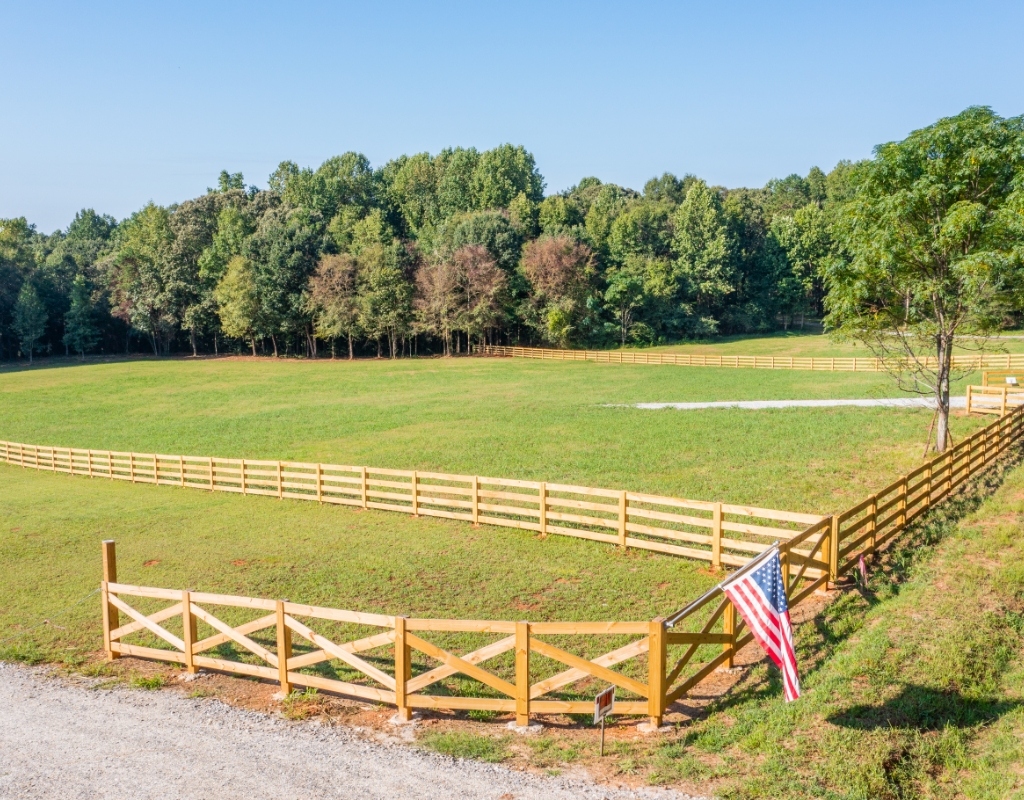
Jackson County offers a balance that appeals to people looking for more room to build and live. Buyers can find rural acreage, agricultural surroundings, and greater privacy while remaining connected to Jefferson, Commerce, Interstate 85, schools, shopping, and other everyday needs.
Buying land in Jackson County, Georgia, begins with understanding how the property supports the home and lifestyle you want to create. Zoning, school districts, road access, utilities, soil conditions, and homesite placement can vary from one parcel to the next. Learning how these pieces work together will help you compare properties and choose your land with confidence.
What buyers should know about building in Jackson County
The most important thing to understand is that a Jackson County address does not tell you everything about a property.
Land inside the City of Jefferson or the City of Commerce may be governed by different zoning regulations, permit requirements, utilities, and school systems than land in unincorporated Jackson County. Even two nearby properties can have different access, water, septic, power, or building considerations.
Before choosing a property, confirm:
- Which city or county has jurisdiction
- The current zoning
- Whether your intended home and other structures are permitted
- The assigned school system
- The type of road access
- Water, power, and internet availability
- The location of suitable septic areas
- How the homesite, driveway, and utilities will work together
Understanding these details early gives you a clearer picture of what it will take to move from owning the land to building your home.
Jackson County combines rural acreage with access to established communities
Jackson County is in Northeast Georgia, with Jefferson serving as the county seat. Interstate 85 passes through the county and provides regional access toward metro Atlanta and other parts of Northeast Georgia.
Jefferson and Commerce are two of the county’s most established communities. Both give acreage owners access to shopping, dining, schools, healthcare, employment, and daily services while allowing them to live beyond denser residential areas.
Jefferson provides a central connection within the county
Jefferson is centrally located within Jackson County and is connected to surrounding communities by U.S. 129 and the county road network. Buyers looking around Jefferson can find properties within the city as well as rural land carrying a Jefferson mailing address.
That distinction matters. A property can have a Jefferson address without being inside the city limits. Buyers should confirm whether the City of Jefferson or Jackson County governs the parcel rather than relying on the mailing address.
Commerce provides convenient access to Interstate 85 and U.S. 441
Commerce sits in the northern portion of Jackson County, close to Interstate 85 and U.S. 441. It provides convenient access to shopping, restaurants, schools, services, and regional travel.
As with Jefferson, a Commerce mailing address does not necessarily mean the property is inside the city limits. Rural land outside Commerce may fall under Jackson County’s zoning and permitting authority even when Commerce appears in the postal address.
When comparing locations, drive the actual route from the property to the places your household uses regularly. Distance to work, school, groceries, healthcare, and Interstate 85 may be more useful than the name of the nearest city.
Confirm the property’s jurisdiction before reviewing its zoning
The first zoning question should be: Who governs this property?
A parcel may be located:
- In unincorporated Jackson County
- Inside the City of Jefferson
- Inside the City of Commerce
- Inside another municipality within Jackson County
The governing jurisdiction determines which planning department you should contact and which regulations apply.
For property in unincorporated Jackson County, the county’s Unified Development Code regulates the use of land, the placement and use of buildings, and other development activity. Property inside a city may be subject to that municipality’s zoning and development requirements instead.
Zoning affects more than whether you can build a house
A zoning district can influence:
- Whether a single-family home is permitted
- Minimum lot size
- Building setbacks
- The placement and size of accessory structures
- Agricultural uses
- Home-based businesses
- Guest houses or additional dwellings
- Subdivision of the property
- Whether a particular use requires additional approval
If you want a workshop, barn, guest house, animals, or space for a home-based business, discuss those plans with the appropriate planning department. Do not assume that acreage alone permits every intended use.
Jackson County provides an online mapping system showing parcels, roads, addresses, city limits, and zoning for unincorporated property. Because online zoning information is updated periodically, important details should also be confirmed directly with the appropriate planning and zoning office.
No HOA does not mean there are no land-use requirements
Land without an HOA can provide greater freedom over how you use and enjoy your property. However, zoning regulations, building codes, setbacks, easements, and recorded deed restrictions may still apply.
A buyer should review both the public regulations and the property’s recorded documents. This helps establish what can be built, where it can be placed, and whether any easements or private restrictions affect the plan.
Rural living starts with choosing the right setting
Acreage living can provide more privacy, more room between neighboring homes, and greater flexibility in how different parts of the property are used.
Depending on the land and its zoning, that space may support:
- A home set farther from the road
- A garden or outdoor gathering area
- A workshop or barn
- Room for animals
- Trails and recreational space
- Future additions
- More natural screening around the home
The experience of living on acreage also depends on the property’s infrastructure. A longer driveway, a private road, a private well, a septic system, or a rural internet connection may become part of everyday ownership.
These features are not unusual for rural property. They simply need to be understood and included in the building plan. The right property should support both the setting you want and the practical needs of your household.
School assignments depend on the exact property location
Jackson County includes three public school systems:
- Jackson County School System
- Jefferson City Schools
- Commerce City Schools
The correct system depends on where the property is located, not simply whether the mailing address says Jefferson or Commerce.
The Jackson County School System serves properties across much of the county. Jefferson and Commerce operate their own separate city school systems through Jefferson City Schools and Commerce City Schools.
School attendance zones can also change as communities grow and new facilities open. Families should verify the assigned schools using the exact property address or parcel information directly with the appropriate school system.
The nearest school may not be the assigned school, and a third-party property website may not reflect the latest attendance boundaries. Direct confirmation gives families the clearest information before choosing their land.
Utility availability must be verified for the individual parcel
Jackson County has several utility providers, but countywide service does not mean every utility is available at every property.
Before choosing land, determine which services are already available, which will need to be extended, and how those connections will relate to the homesite.
Electricity may be nearby without being installed on the property
Jackson EMC, Georgia Power, and municipal utilities serve different parts of Jackson County. The provider should be confirmed for the exact address.
Buyers should ask:
- Which company serves the parcel?
- Is power located at the road or already on the property?
- How far is the planned homesite from the nearest service point?
- Can the service be installed underground?
- Where will the transformer and meter be located?
- Will the provider require a utility easement?
- What must be completed before temporary construction power is available?
Jackson EMC’s service rules explain that underground-service design depends on distance, engineering requirements, site conditions, and coordination between the property owner and the utility.
The power route should be considered alongside the driveway and homesite. Planning these elements together can create a more practical site layout and help prevent one improvement from interfering with another.
Some properties have public water while others require a well
The Jackson County Water and Sewerage Authority serves parts of unincorporated Jackson County. Cities may operate separate municipal utility systems, and some rural properties rely on private wells.
The Authority provides an online service map, but buyers should confirm availability directly for the individual parcel. A water line along a nearby road does not automatically establish whether a new connection is available or what the connection will require.
If public water is unavailable, the building plan should include a suitable location for a private well. The well must be considered in relation to the home, septic system, property boundaries, and other site features.
Rural homes commonly use septic systems
Many acreage properties outside established sewer-service areas use an individual septic system.
Before choosing land, ask whether a perc test has been completed by a licensed soil scientist and where the suitable septic areas have been identified. The results help the buyer and builder understand where an onsite septic system may be placed.
The septic area should be considered together with:
- The proposed homesite
- Driveway placement
- Well location
- Property boundaries
- Creeks and drainage areas
- Workshops, pools, and future additions
- Space for a replacement septic area
A soil evaluation provides important information for planning, but the final septic-system design and permitting remain subject to the applicable professional and county requirements.
Internet service should be checked at the exact address
Internet options may include cable, fiber, fixed wireless, cellular, or satellite service. Availability can change between neighboring properties, particularly when a new home will be set far from the road.
Ask providers whether service is available at the parcel, how a new construction address is established, and whether the planned homesite will require an extension. It is also helpful to check cellular reception while walking the property.
Road frontage and practical access are not the same
A property may have legal road frontage but still need careful planning before a safe, usable driveway can be installed.
Jackson County properties may have:
- Paved county-road frontage
- Gravel-road frontage
- Access from a private road
- Shared access
- An existing driveway
- Road frontage without a prepared entrance
When evaluating access, determine whether the road is public or private. If it is private, review who maintains it and whether those responsibilities are documented.
The driveway itself should be evaluated for:
- Safe sight distance
- Slope
- Drainage
- Culvert requirements
- Length to the homesite
- Year-round use
- Access for construction and emergency vehicles
- The route of underground utilities
- Its relationship to the septic area
A well-positioned driveway does more than connect the road to the home. It helps organize how the entire property will function.
The best homesite brings the property’s main systems together
The best-looking location is not automatically the best place to build. A successful homesite should balance privacy and views with practical access, drainage, utilities, and septic planning.
As you walk the property, consider:
- Elevation and natural drainage
- Slope around the building area
- Morning and afternoon sunlight
- Privacy from the road and neighboring homes
- Driveway length and grade
- Suitable septic areas
- Public water or well placement
- The route for electric service
- Trees you want to preserve
- Creeks, flood zones, and drainage channels
- Space for future buildings or outdoor areas
Our guide to choosing the best homesite on an acreage property explains how these elements should work together.
A homesite set farther from the road may provide greater privacy, while a closer location may require a shorter driveway and utility run. The right choice depends on the land and the way you plan to use it.
Building permits depend on the governing jurisdiction
Jackson County accepts planning, zoning, development, and building applications through its Citizen Self-Service portal. The county also publishes residential building-permit checklists to help applicants understand the documents required.
A typical planning process may include:
- Confirming jurisdiction and zoning
- Reviewing the boundary survey
- Completing the soil and septic evaluation
- Selecting the homesite
- Planning the driveway and road access
- Coordinating water and electric service
- Preparing house plans and a site plan
- Applying for the required permits
- Beginning site work and construction
The exact order may vary according to the property, the house plans, and the governing jurisdiction. Property inside a municipality may follow that city’s building and permitting process rather than the county’s.
Your builder, soil scientist, surveyor, utility providers, and local officials can help confirm the requirements for the individual property.
Jackson County land-buyer checklist
Use this checklist while comparing acreage in Jackson County:
- Is the property inside city limits or in unincorporated Jackson County?
- What is the current zoning?
- Are the home, accessory structures, and intended uses permitted?
- What setbacks apply?
- Are there recorded easements or deed restrictions?
- Has a boundary survey been completed?
- Is road access public or private?
- Is the driveway installed or still being planned?
- Has a perc test been completed?
- Have the homesite and septic areas been identified?
- Is public water available, or will the property require a well?
- Which electric provider serves the property?
- How will power reach the homesite?
- Which internet options are available at the address?
- Which school system and schools serve the property?
- Do terrain, drainage, creeks, or flood zones affect the building plan?
- Is there room for the home, driveway, septic system, and future additions to work together?
Prepared land creates a clearer path toward building
Owning acreage in Jackson County can give you the space, privacy, and flexibility to create a home that fits the way you want to live. The strongest property choice is one based on more than location and acreage. It should also account for zoning, access, schools, utilities, soil conditions, and the physical layout of the land.
At Millwood, we prepare and sell build-ready acreage so buyers can understand more about the property before deciding where to build. Preparation varies by property, so each listing should clearly identify what has been completed.
When the full Millwood Build Ready standard applies, it includes:
- Driveway installed
- Homesite partially cleared
- Underground power installed
- Perc test completed
- Boundary survey completed
- Property lines marked
- Road access in place
With the important groundwork completed and documented, you can spend more time considering how the property fits your plans and move forward with confidence.
Explore Build-Ready Acreage in Jackson County
Looking for land with more of the essential preparation already completed?
View Millwood’s available lots and explore build-ready acreage in Jackson County and surrounding North Georgia communities.