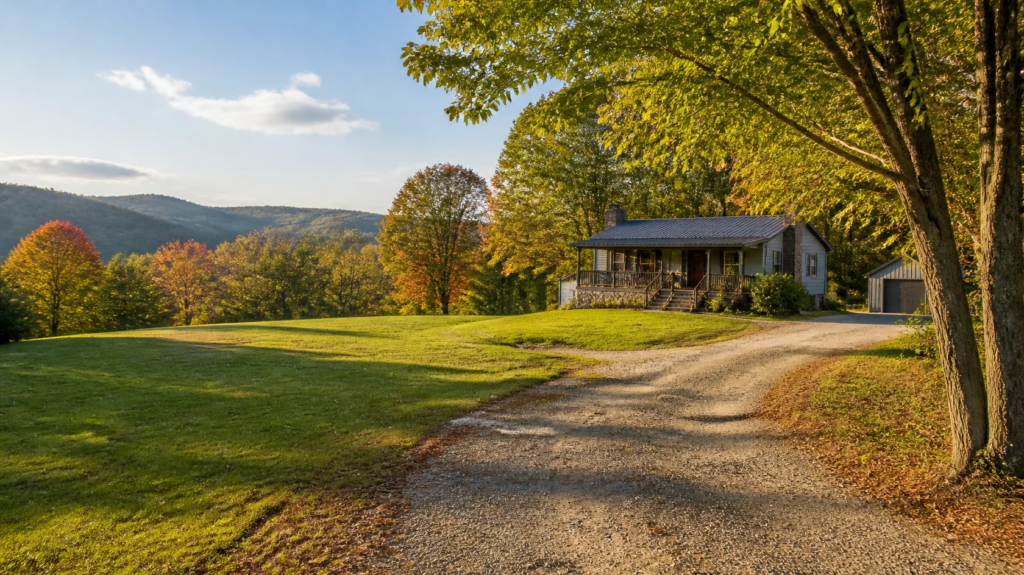
Maybe you want a workshop, but your neighborhood’s rules make it difficult. Maybe your backyard feels smaller every year. Or perhaps you would simply like to sit on your porch without looking straight into the house next door.
You may have chosen your subdivision for good reasons. It was convenient, the house fit your budget, or the neighborhood suited your family at the time. That does not mean your next home has to offer the same setup.
It is possible to leave HOA living behind. You can look for an existing home on acreage, buy land and build, or choose a smaller homesite without an HOA. The starting point is understanding what you want to change and finding a property that makes those changes possible.
What would you like to do differently at home?
Before you start looking at listings, think about what prompted the search.
Perhaps the garage has become a storage room, leaving nowhere to work on projects. You would like a separate shop, but there is no space for one. Perhaps you want a vegetable garden and a bigger yard, or somewhere to keep a trailer without paying for off-site storage.
For other homeowners, the issue is privacy. Houses are close together, outdoor conversations carry, and even a fenced backyard does not provide the separation they want.
Write down the things you would change if you could. Be specific.
“More space” is a starting point. “Enough usable ground for a house, a detached workshop, and a garden” gives you something concrete to look for.
Those details help you choose a property that solves the problems behind your move.
Leaving HOA living means planning for a different property
If your goal is to live without an HOA, you can make that a requirement for your next purchase.
Moving out and removing your current property from an association are different matters. For this move, the practical focus is finding your next property, confirming its restrictions, and coordinating the sale of your current home.
It also helps to separate two priorities: living without an HOA and living outside a closely spaced subdivision.
A property can have no HOA and still have a small yard with neighbors nearby. If you want more privacy, pay attention to the homesite, surrounding properties, tree cover, and distance between houses as well as the listing’s HOA information.
Walk the property. Look beyond the photographs. Consider where you would spend time outside and what you would see from the rooms you use most.
You do not have to buy a large farm
Leaving a subdivision does not require taking on more land than you want to maintain. There are several ways to make the change.
Buy an existing home on acreage
An existing home lets you evaluate the house and its setting together. You can stand on the porch, walk the yard, and see how the driveway and any outbuildings work.
This may suit you if you want to move without managing a new construction project. You will still need to assess the home’s condition and whether the property can accommodate your future plans.
Buy land and build
Buying land gives you the opportunity to plan the home around the property and your daily routines.
You can discuss house placement, driveway layout, outdoor space, and potential accessory buildings with your builder before construction begins. That flexibility comes with decisions about design, site work, financing, permits, and timing.
If this route interests you, involve a builder while you are evaluating the land so you can understand how your plans and budget fit the site.
Choose a smaller homesite without an HOA
You may want a little more separation and room for a garden without several acres of upkeep.
A smaller property may meet those needs. The acreage number alone will not tell you, though. Shape, slope, access, and the location of the usable ground all affect what you can do with it.
The right property is one you can use and care for comfortably.
Picture an ordinary day there
When you tour a property, imagine a regular weekday.
Where would you park after work? How far would you carry groceries? Would your garden get enough sunlight? Could you reach the workshop without driving across the yard?
Think about the practical details that affect everyday life:
- Privacy: Where are neighboring homes in relation to your potential homesite?
- Outdoor space: Is the usable ground close to the house or farther away?
- Access: Would the driveway work for your vehicles and any equipment?
- Travel: What would the trip to work, school, and groceries look like?
- Maintenance: How much mowing, driveway upkeep, or woodland care are you willing to handle?
- Connectivity: Can you get the internet service you need at that address?
A property should make sense on a busy Tuesday as well as during a quiet weekend visit.
Check what “no HOA” means before you buy
When leaving an HOA is a main reason for moving, make sure you understand the next property’s requirements before purchasing.
No HOA and no deed restrictions are separate things to verify. Recorded covenants can limit how a property is used, so review the title documents and restrictions with your closing attorney rather than relying on a listing description alone.
Local requirements also remain relevant. In unincorporated Jackson County, Planning and Zoning provides information about permitted uses, setbacks, and lot requirements. The county also has a permit process for residential accessory buildings. If a workshop or detached garage is part of your plan, investigate those requirements before committing to a property.
Ask specific questions:
- Can this parcel accommodate the home and accessory building I want?
- Are there easements that affect where improvements can go?
- Who maintains the access road?
- What water, septic, and power arrangements will be needed?
- Are my intended activities allowed?
Checking these details helps you find land where your plans are realistic.
Make a budget for the whole move
Start with the purchase price, then account for the costs of getting from your current home to the next one.
For an existing house, consider selling expenses, closing costs, moving, repairs, and any improvements you want to make.
If you plan to build, include the land, construction, remaining site work, utility connections, and any well or septic installation needed. Discuss financing and payment timing with your lender before making commitments.
Also consider the ongoing work. A larger property may mean more mowing, longer driveway maintenance, or additional equipment. Ask what those responsibilities would look like for each property you visit.
The goal is to choose a home and setting you can enjoy without stretching beyond a comfortable budget.
Plan the transition in manageable steps
You do not need to put your current home on the market just to start exploring.
First, define your priorities. Decide what is essential and what is optional. A workshop may be essential; a creek may be a preference.
Next, establish a realistic budget. Speak with the appropriate lender about buying an existing home or purchasing land and building. Understand how the timing of your current home’s sale affects your options.
Then, visit properties. Touring different parcel sizes and settings can help you understand what actually suits you.
Review the details before committing. Examine the survey, recorded documents, access arrangements, and available soil information. Confirm your intended uses with the relevant local offices.
Finally, coordinate the move. If you are building, discuss the schedule with your builder and plan for possible delays. Consider whether you would need temporary housing or could carry overlapping expenses.
Each step gives you information for the next decision.
Explore a different setting in Jackson County
At Millwood Land Company, we prepare and sell our own land in Jackson County, Georgia, with no HOA and no deed restrictions.
When you walk a property with us, you can look at the homesite, understand the access, and ask questions about how the land might fit your plans.
Our Build Ready groundwork includes:
✓ Driveway installed
✓ Homesite partially cleared
✓ Underground power installed
✓ Perc test completed by a licensed soil scientist
✓ Boundary survey completed
✓ Property lines marked
✓ Road access in place
These completed steps give you and your builder a clearer starting point. You will still need to plan the home, obtain the required approvals, and account for remaining construction and site-specific work. A partially cleared homesite, for example, is not a finished building pad.
Bring your questions about the house, workshop, garden, or outdoor space you have in mind. We can show you what has been completed and help you understand the property you are considering.
Start by walking a property
You do not have to keep choosing the same kind of neighborhood because it is what you know.
If your current home leaves you wishing for more space, fewer association decisions, or a different setting, you can begin exploring those possibilities now.
Start with a visit. Walk the land, consider the commute, and see whether you can picture your daily life there.
Ready for more space and no HOA? View available properties and find a place that fits how you want to live.