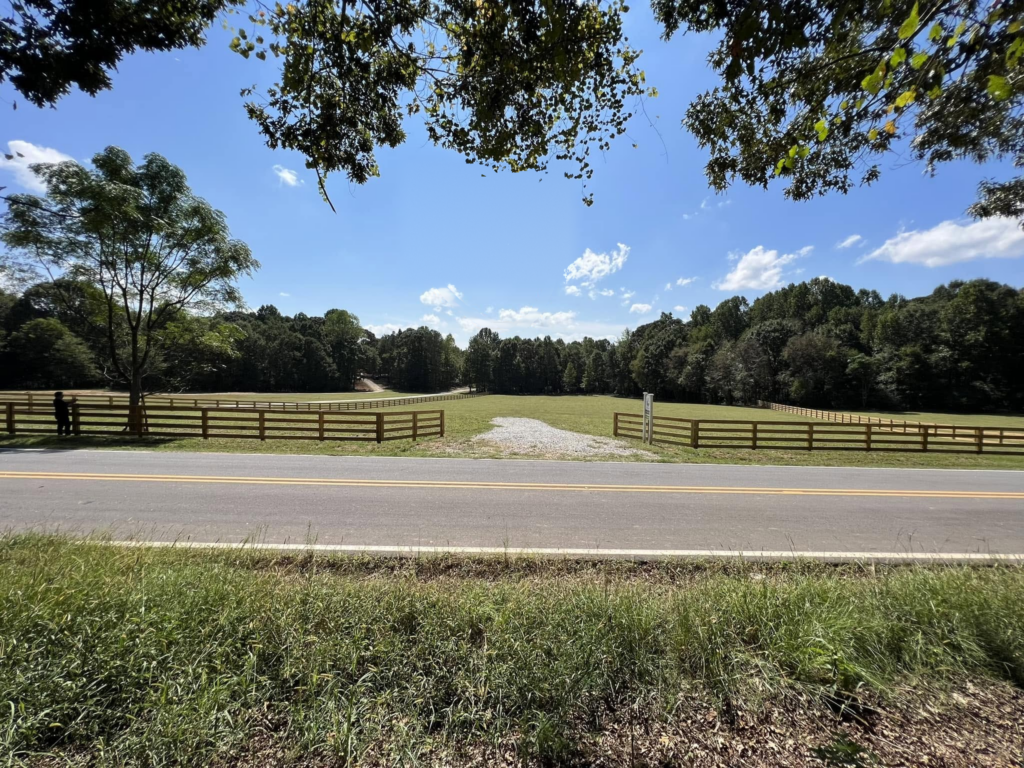
Moving to North Georgia often begins with a simple vision: more space, greater privacy, and enough land to build a home that fits the way you want to live.
You may picture a quiet homesite surrounded by trees, a detached workshop, room for a garden, or space where children and pets can spend more time outside. For some buyers, the goal is to leave a crowded subdivision. For others, it is to build a final home, create a place for extended family, or enjoy a slower pace without moving too far from work and everyday conveniences.
North Georgia can offer all of that. But buying vacant land is different from purchasing a finished home.
The view and acreage are important, but they are only part of the decision. Before buying, you also need to understand whether the property can support your plans, what it will take to build, and what daily life in that location will actually look like.
Here are the most important things to consider before buying land and building a home in North Georgia.
Start With the Life You Want the Property to Support
Before searching for land, think beyond the house itself.
Consider how you want to use the property now and how those needs could change over time. A parcel that works well for one buyer may not work for another, even if both buyers want the same amount of acreage.
Ask yourself:
- How much privacy do I want?
- How far am I willing to drive for work, school, shopping, and healthcare?
- Do I want space for a workshop, detached garage, garden, or animals?
- Will I need RV, boat, trailer, or equipment storage?
- Am I planning one home or hoping to add a guest house later?
- Do I want mostly open land, wooded land, or a combination?
- How much property am I realistically prepared to maintain?
- Do I need reliable high-speed internet for work or school?
- Am I prepared to use a private well and septic system?
These questions help you distinguish between acreage that simply looks attractive and a property that can support the way you plan to live.
Understand That “North Georgia” Covers Different Lifestyles
North Georgia is not one uniform market.
Some communities provide a rural setting while remaining relatively close to highways, employment centers, healthcare, and major stores. Other properties may offer considerably more seclusion but require longer drives for everyday needs.
For example, land near Jefferson, Commerce, Nicholson, or Gainesville may offer a balance between country living and access to established towns. Properties farther from major highways may provide additional privacy, but that privacy can come with longer commutes and fewer nearby services.
When comparing locations, consider more than the distance shown on a map. Drive the route yourself and evaluate:
- Morning and evening traffic
- Road conditions
- Distance to grocery stores
- Access to hospitals and urgent care
- Proximity to schools and childcare
- Travel time to work
- Distance to building-supply stores
- Availability of contractors and other services
- The character of neighboring properties
If commuting matters, test the drive at the time you would normally travel. A route that appears manageable on a quiet weekend may feel very different on a weekday morning.
Confirm the Property’s Zoning
Zoning determines how land may be used. It can affect the type of home you build and whether you can add certain structures or uses later.
Before buying, confirm the property’s current zoning directly with the applicable county or municipality. Depending on the location, zoning can influence:
- The type of residence allowed
- Minimum home size
- Building setbacks
- Agricultural uses
- Livestock
- Home-based businesses
- Workshops and accessory buildings
- Guest houses
- Manufactured or modular homes
- Short-term rentals
- The number of primary residences permitted
Buyers should pay particular attention if they want multiple homes on one parcel. In many areas, a parcel is generally intended for one primary residence. A guest house may be possible, but it can be subject to specific size, placement, permitting, or occupancy requirements.
Do not assume that having enough acreage automatically gives you permission to build several homes. Explain your complete plan to the local planning and zoning department before purchasing.
No HOA Does Not Mean There Are No Rules
A property without a homeowners association can offer considerably more flexibility. You may have greater freedom to choose your house design, build a workshop, park recreational vehicles, install fencing, or use the land in ways that might be restricted in a typical subdivision.
However, “no HOA” does not mean the property is entirely unrestricted.
Three different types of requirements may still apply:
- County or municipal regulations: These can address zoning, setbacks, septic systems, building permits, driveway placement, accessory structures, and land disturbance.
- Deed restrictions: These are recorded conditions attached to a property and may continue to apply even when there is no active homeowners association.
- Easements: These may allow utilities, neighbors, or other parties to use a defined portion of the property.
Before closing, review the title work, deed, recorded plat, easements, and any restrictions with the appropriate professionals. Millwood explains this distinction further in No HOA Doesn’t Always Mean No Restrictions
Make Sure the Land Has a Suitable Homesite
A large parcel does not guarantee that every part of it can be built on.
Slope, drainage, soil conditions, streams, flood zones, easements, and setbacks can all reduce the area available for a home. A property may contain several acres while still having only one practical location for construction.
When evaluating a potential homesite, consider:
- The slope of the land
- How water moves across the property
- The distance from the road
- The potential driveway route
- The location of the septic area
- The distance to power
- Required setbacks
- Trees that may need to be removed
- The position of streams, drainage areas, or flood zones
- The amount of grading and clearing required
A good homesite should work with the property’s natural terrain as much as possible. Extensive grading, long retaining walls, or complicated drainage work can add significantly to construction costs.
This is why walking the land matters. Photos and aerial maps can help you narrow your options, but they cannot fully show how the ground feels, how steep a driveway may be, or where water travels after heavy rain.
Investigate the Soil Before You Buy
Most rural properties in North Georgia rely on a private septic system. Before that system can be designed and installed, the soil must be evaluated.
A soil evaluation helps identify where the property may support a conventional or alternative septic system. It also helps buyers understand where the house and septic components may need to be positioned in relation to each other.
Do not rely on a listing description that only says the land “should perc.” Ask for the actual soil documentation and determine:
- Whether an evaluation has been completed
- Who performed it
- What areas were studied
- Whether suitable septic areas were identified
- Whether the findings match your intended homesite
- Whether additional county review will be required
Ideally, the evaluation should be completed by a licensed soil scientist before you purchase the property.
It is also important to remember that a completed soil study does not replace the county permitting process. The relevant environmental health department will still have requirements that must be met when the septic system is designed and permitted.
For a closer explanation, read What Is a Perc Test and Why Does It Matter Before You Buy Land?.
Understand How You Will Access the Property
Every buildable property needs reliable and legally recognized access.
Some land has direct frontage on a paved county road. Other properties are reached by a private road or recorded access easement. Each arrangement can work, but buyers need to understand exactly what they are purchasing.
Questions to ask include:
- Does the property have direct public-road frontage?
- If access is private, is it recorded?
- Who owns and maintains the private road?
- Is the access wide enough for construction vehicles?
- Can emergency vehicles reach the proposed homesite?
- Will the county approve the driveway location?
- Is there enough visibility where the driveway meets the road?
- Are there streams, ditches, or steep slopes along the driveway route?
- Will a culvert be required?
- How long will the driveway be?
A long private driveway can create privacy, but it may also increase the cost of grading, gravel, drainage, maintenance, power installation, and emergency access.
Learn more in Why Road Access Matters More Than Most Buyers Realize.
Review the Boundary Survey and Recorded Plat
Never assume that fences, trails, mowing lines, utility poles, or tree lines represent the legal boundaries of a property.
A boundary survey identifies the parcel’s legal dimensions and helps locate:
- Property corners
- Boundary lines
- Road frontage
- Easements
- Rights-of-way
- Encroachments
- Streams or other mapped features
- The property’s total acreage
The recorded plat can also help you understand the shape of the property and how its features relate to one another. Take a copy with you when walking the land and compare it with any visible markers on the ground.
For larger acreage, clearly marked lines and corners make it much easier to understand what you are considering. Millwood’s guide to boundary surveys explains why this document is so important before closing.
Determine How the Property Will Receive Water
Rural properties may be served by public water or a private well.
If public water is available, verify the information directly with the water provider. A water line running along the road does not always mean that a connection is immediately available for every property.
Ask:
- Is the parcel inside the provider’s service area?
- Is there an active water line at the property?
- Is capacity currently available?
- What are the tap, meter, and connection fees?
- How far will the private line need to run to the homesite?
- Will road boring or additional easements be required?
If the property requires a private well, research local drilling conditions and speak with well contractors familiar with the area. Well depth, terrain, access for drilling equipment, and the distance from the well to the house can all affect the final cost.
A private well also needs to be positioned with required separation from the septic system and other potential sources of contamination.
Verify Power Before Finalizing Your Plans
Power lines near a property do not necessarily mean electricity can be connected cheaply or quickly.
Contact the applicable electric provider and ask:
- Which utility serves the parcel?
- Where is the nearest connection point?
- Will new poles, transformers, or easements be needed?
- Can the service be installed underground?
- Who pays for trenching or line extensions?
- How long could installation take?
- Is the planned homesite accessible for installation crews?
The farther the home sits from the available power source, the more installation may cost. If you want a secluded homesite at the rear of a parcel, compare the privacy benefits with the cost of extending power and constructing a longer driveway.
On Millwood’s build-ready properties, underground power installed to the lots reduces one of the uncertainties buyers commonly face when evaluating undeveloped land.
Check Internet and Cellular Service at the Exact Property
Reliable internet is essential for many buyers, particularly those who work remotely, operate a business, homeschool, or use internet-based security and home systems.
Internet availability can change from one road—or even one address—to another. Do not rely only on a general coverage map or assume that service available to a nearby house will automatically be extended to your homesite.
Verify:
- Which providers serve the exact address
- Whether fiber, cable, fixed wireless, or satellite service is available
- Expected download and upload speeds
- Installation costs
- Whether the provider will extend service to a long driveway
- Cellular coverage throughout the property
- Available backup options
Test your phone during the property tour, but remember that cellular performance can vary by carrier, weather, terrain, and tree cover.
Millwood’s article on getting power, water, septic, and internet to rural land explores these considerations in greater detail.
Account for Site-Preparation Costs
The price of the land is only one part of the total project.
Before buying, create a preliminary budget for the work required to make the property ready for construction. Depending on the parcel, that may include:
- Surveying
- Soil evaluation
- Septic design and installation
- Well drilling or public-water connection
- Power extension
- Internet installation
- Driveway construction
- Culverts
- Clearing
- Grading
- Drainage work
- Erosion-control measures
- Permits
- Tree removal
- Engineering
- Construction-loan expenses
Two similarly priced parcels can have very different total costs. One may already have a practical homesite, driveway, completed soil evaluation, survey, and nearby utilities. Another may require substantial work before a building permit can be considered.
Comparing properties based only on price per acre can therefore be misleading.
Speak With a Builder Earlier Than You Think
You do not necessarily need final house plans before purchasing land, but involving a builder early can help you identify issues that may otherwise be overlooked.
A builder can evaluate:
- Whether the proposed home fits the homesite
- The amount of grading required
- Foundation considerations
- Driveway access for heavy equipment
- Utility distances
- Drainage
- Tree removal
- Construction staging
- The likely effect of terrain on the budget
If you are considering a basement, detached shop, guest house, barn, or other major feature, mention it early. The best location for the primary home may affect whether those future improvements remain possible.
Understand the Financing Process
Financing land and construction differs from obtaining a standard mortgage on a completed home.
Depending on your situation, you may use:
- Cash for the land purchase
- A land loan
- A construction loan
- A construction-to-permanent loan
- Equity from another property
- A combination of financing sources
Lenders may evaluate the land, borrower qualifications, construction plans, builder, budget, appraisal, and projected completed value. Down-payment requirements and lending terms can also differ from those of a conventional home mortgage.
Speak with lenders who regularly finance land and new construction. A lender familiar with rural North Georgia properties will be better positioned to explain the documentation, timeline, and costs involved.
Walk the Property Before Making a Decision
A thorough property walk is one of the most valuable steps in the buying process.
Do not remain only near the road or proposed homesite. If conditions allow, walk the property lines and examine the land from several directions.
During the tour:
- Carry the plat or survey
- Look for boundary markers
- Study changes in elevation
- Observe drainage areas
- Examine the driveway route
- Locate the proposed homesite
- Ask where the septic area was identified
- Look for visible utilities and easements
- Note neighboring land uses
- Listen for road or industrial noise
- Consider sun exposure and privacy
- Ask what preparation has already been completed
Beautiful views matter, but your decision should also account for what it will take to reach the homesite, install utilities, manage water, and construct the home.
Look for Land That Reduces Uncertainty
Buying land will always involve planning, but some properties require buyers to solve far more unknowns than others.
A genuinely build-ready property should provide clear information about the issues that most directly affect construction. Depending on the parcel, that may include:
- A completed boundary survey
- Clearly marked property lines
- A soil evaluation completed by a licensed soil scientist
- Suitable septic areas identified
- A practical homesite
- An installed or planned driveway
- Confirmed legal access
- Power availability
- A clear understanding of water service
- Known zoning and recorded restrictions
These items do not mean you can begin building immediately without permits, plans, and county approval. They mean that some of the most important questions have already been investigated, reducing the likelihood of expensive surprises.
You can learn more in What Makes Land Build-Ready in North Georgia?.
Build the Life You Want on Land You Understand
Moving to North Georgia can provide the space, privacy, and flexibility that are difficult to find in a conventional neighborhood. But the right property is not simply the one with the prettiest view or the lowest price per acre.
It is the land that supports your home, budget, daily routine, and long-term plans.
Take time to confirm zoning, study the soil, review the survey, understand access, verify utilities, walk the terrain, and speak with qualified local professionals. The more you know before purchasing, the more confidently you can move from imagining your North Georgia home to building it.
Millwood Land Company prepares acreage to remove many of the uncertainties buyers face when purchasing vacant land. Our properties may include completed soil evaluations, full boundary surveys, marked property lines, installed driveways, partially cleared homesites, and underground power installed to the lots.
Explore our available North Georgia lots or schedule a property walk to see what build-ready land looks like in person.
Call: 470-900-4282
Email: [email protected]