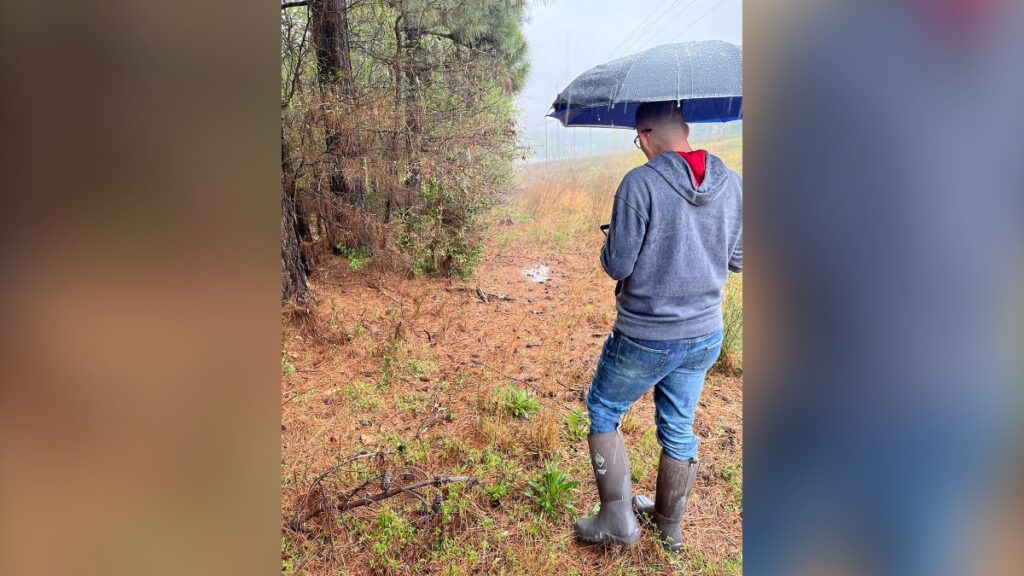
If you’ve toured lots in a subdivision, you know how it goes. Someone points to a rectangle of grass between two houses, hands you a list of approved exterior colors, and asks you to picture your life there.
Walking land is different. There’s no cul-de-sac and no approval board, just trees, sky, and room to build what you’ve actually imagined. And in North Georgia, fall and winter are the best time to see it. With the hardwoods bare, the rolling shape of the land, the long views, and the quiet county roads are all out in the open.
Here’s how to tour land for sale so you leave knowing whether it’s the place for you.
What should I look for when touring land?
When touring land, look at how you get in, where the property lines are, where your home would sit, and how the land lies. Notice sun, views, trees, and privacy, check cell signal and drive times, and picture your daily life there. On a Build Ready property, the groundwork is already done, so your tour can focus on fit.
What’s already answered on a Millwood property?
On most land, a tour is a hunt for problems. On a Build Ready property from Millwood, it’s a search for fit. Every Millwood property comes with seven things already in place:
|
Already in place |
What it means on your tour |
|
Driveway installed |
You drive in the way you would every day |
|
Homesite partially cleared |
You can stand where your home would be |
|
Underground power installed |
No wondering how power reaches the house |
|
Perc test completed by a licensed soil scientist |
The soil has been evaluated for a septic system |
|
Boundary survey completed |
You know the exact shape and size of what you’re walking |
|
Property lines marked |
You can see where your land starts and stops |
|
Road access in place |
Getting to the property is settled |
That leaves the part only you can judge: whether this land fits the life you want. The rest of this guide is about that.
How should I prepare before touring land?
Know the land’s shape before you arrive, pick the right day, and bring the people who’ll live there.
Study the map first
Open the boundary survey and the listing’s parcel viewer before you go. You’ll know where the road frontage is, how the land is shaped, and roughly where the homesite sits, so you walk with a plan instead of wandering.
Pick your day
A clear fall or winter day shows the land at its most honest, with bare trees revealing every rise, dip, and view. If you can, go once after a rain too. Georgia’s red clay shows you exactly where water moves.
Dress for the land
Wear boots you don’t mind getting red, and long pants for brush. Bring water, a charged phone, and the Land Viewing Checklist so you can take notes as you go. [Embed or link: Land Viewing Checklist]
Bring your people
Bring your spouse, your kids, your builder, or whoever will share this land with you. Everyone notices something different, and walking it together is often the moment a family starts picturing the same future.
What should I notice when I first arrive?
The first few minutes on a property tell you more than most buyers expect.
The drive in
Pay attention to the county road, the turn in, and the driveway. Picture this drive on a school morning, a rainy evening, or a Saturday with a trailer hitched to the truck. Ask what type of road access the property has, since it varies from one property to the next.
The first quiet minute
Before you walk anywhere, stop at the homesite and listen. No leaf blowers, no neighbor’s patio a few steps away, no one watching from the next window. That first quiet minute is often when buyers realize what they’ve been missing.
Walk the lines
With property lines marked, you can see exactly what’s yours. Walk at least part of the boundary. It’s easy to fall in love with a view or a stand of oaks that turns out to be on the neighbor’s side, and just as satisfying to find that the creek bank or back pasture is yours.
What should I decide as I walk the land?
With the groundwork already in place, your job on the tour is to decide whether this land fits you. Walk slowly, take photos, and work through these six questions.
Which way would your home face?
With the homesite partially cleared, you can stand right where the house would be. Turn around slowly. Where does the morning sun come up? What would you see from the front porch, and from the kitchen window? Would you rather look toward the road or toward the woods?
How does the land feel underfoot?
Notice how the land rolls. Some lots sit high with long views; others are tucked into the trees. Walk the slopes and imagine where the kids would sled after a rare snow or where a garden would get the most sun. On soil, the question is already answered: the perc test is completed, so you know the ground has been evaluated for a septic system. [What Is a Perc Test article] Moving From City Sewer to Septic
Which trees would you keep?
Trees shape how a place feels. A big oak on the west side of the house means shade on summer afternoons. A line of pines along the road means privacy. Pick out the trees you’d build around, and notice where the land opens up.
Where would everything else go?
Underground power is already installed, so think about everything else. Every Millwood property uses a private well, so picture where the well would go with your builder. Then find the spot for the workshop, the garage for the boat, the chicken coop, or the swing set. [well article] [underground power article]
How private does it feel?
Stand at the homesite and look in every direction. How much of the neighbors can you see? How much of the road can you hear? If privacy is part of why you’re leaving the subdivision, give this one real attention.
Can you see your life here?
This is the question the whole tour builds toward. Picture a Saturday morning: coffee on the porch, kids out in the yard, a project waiting in the shop. If you can see it clearly, pay attention to that. It’s usually the best answer you’ll get.
What should I check around the property?
Your land is only part of daily life. Before you leave, check what surrounds it.
- Cell signal. Check your phone at the homesite, not just at the road, and ask what internet options serve the area.
- Sound. Listen for traffic, farm equipment, or nothing at all. If you can, come back at a different time of day.
- Drive times. Time the drive to school, work, groceries, and church, or whatever fills your week. Then weigh those minutes against the space and quiet you’d gain.
- The neighborhood around the land. Notice whether nearby land is pasture, woods, or homes. It tells you what the view might look like years from now.
What questions should I ask during a land tour?
Ask these on every tour, and listen for the specifics behind each answer:
- Are there any easements? Listen for where they run and what they’re for, such as a utility line.
- Are there any restrictions or covenants? Listen for what they limit, such as outbuildings, animals, or home size.
- How is the property zoned? Listen for what you’re allowed to build and keep on the land.
- What type of road access does it have? Listen for how it’s maintained and who uses it.
- Can I see the survey and perc test results? Look at the acreage, road frontage, and where a septic drain field could go.
Write the answers down before you leave the property. If you’re touring more than one lot, they blur together fast.
What should I do after the tour?
- Write notes that evening, while the details are fresh.
- Label your photos by property so you can tell lots apart later.
- Compare lots side by side with the Land Viewing Checklist. [Land Viewing Checklist]
- Go back once more at a different time of day. The land you keep thinking about is usually telling you something.
Walk it like it’s already yours
The best land tours aren’t about finding a perfect property on paper. They’re about standing on a piece of North Georgia and seeing your life there: coffee on the porch, a garden in spring, kids running through the trees, and no one telling you what you can build or where you can park the boat.
On a Build Ready property, the driveway is installed, the homesite is partially cleared, underground power is installed, the perc test is completed, the boundary survey is completed, property lines are marked, and road access is in place. So instead of spending your tour wondering what’s possible, you can spend it deciding whether this is home.
Ready to walk the land? [Schedule a land tour]