When you first visit a piece of raw land, you may have to park beside the road and figure out how to enter the property on foot. Trees, drainage areas and uneven ground can make it difficult to see how the land connects to the road, or how you would eventually reach a future homesite.
A driveway changes that experience.
It gives you a defined way into the property and helps you understand the distance between the road and the prepared area of the lot. It can also make it easier to picture where a home could sit, how much privacy the location may provide and how the property could function once construction begins.
When a property description says “driveway installed,” however, what exactly does that mean? Can you drive on it immediately? Is it paved? Does it already reach the future garage?
Here is what buyers should understand.
What Does “Driveway Installed” Mean?
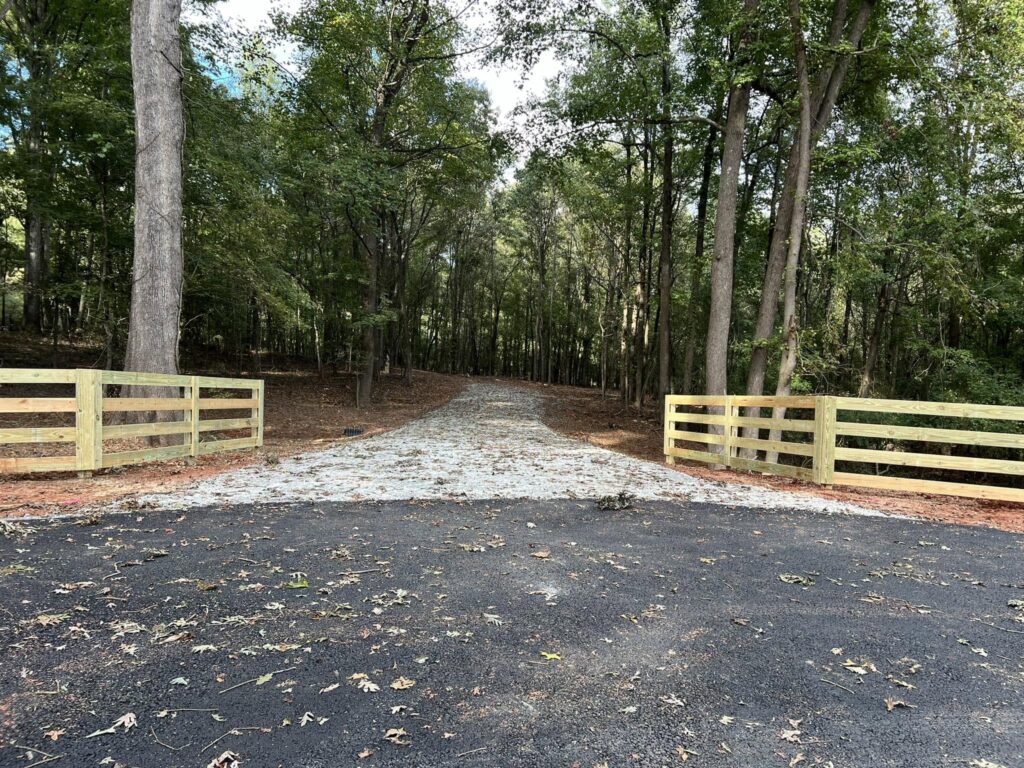
At Millwood, “driveway installed” means an initial driveway entrance and access path have been created on the property.
Depending on the lot and its drainage needs, the work may include a graded entrance, an apron where the driveway meets the road, a culvert and a driveable surface leading farther into the property.
The driveway gives buyers a physical starting point for entering and evaluating the land. It is not necessarily the finished residential driveway that will serve the completed home.
The exact location, length, surface and condition will vary from one property to another. Buyers should review the details for the specific lot and see the driveway in person before making assumptions about what has been completed.
Why a Driveway Matters When You Are Evaluating Land
A driveway is more than a way to get a vehicle off the road. It helps make the property easier to understand.
Without one, you may be looking at the land from the roadside and trying to imagine how you would reach the interior of the property. With a driveway installed, you can begin to see how the entrance connects to the land beyond it.
An installed driveway can help you:
- Enter the property more easily
- Reach the partially cleared homesite
- Understand the distance from the road to the prepared area
- See changes in elevation along the route
- Evaluate the privacy created by setting a home farther from the road
- Picture how people, materials and equipment may move through the property
- Understand how the driveway relates to the surveyed boundaries
These details can be difficult to judge from photographs or a roadside view. Walking the driveway gives you a better sense of how the land may work for your plans.
What May Be Included in an Installed Driveway?
Not every property requires the same driveway work. The terrain, drainage, road type and location of the prepared homesite all influence what is needed.
Here are some of the physical features you may see.
A Defined Driveway Entrance
The entrance is where the driveway connects the property to a public or private road.
Creating this entrance establishes a visible and practical access point. It also helps buyers understand where vehicles will enter the property and how that location relates to the rest of the lot.
The entrance is not always the buyer’s final design. A future house plan, garage location or county requirement may affect how the entrance is finished.
A Driveway Apron
The apron is the section of the driveway immediately beside the road.
This transition area helps connect the road surface to the driveway. Its material and finish may differ from the final driveway the buyer chooses for the completed home.
For example, an initial apron may provide functional access while the buyer later decides whether the finished driveway will use gravel, concrete, asphalt or another approved material.
A Culvert Where Drainage Requires One
Some roadside areas have drainage ditches that carry water alongside the road. Where a driveway crosses one of these areas, a culvert may be needed to allow water to pass beneath the entrance.
A culvert helps preserve the drainage path while providing vehicle access above it.
Not every driveway requires or includes a culvert. Whether one is needed depends on the property’s drainage conditions and applicable requirements. Buyers should confirm what is present on the individual lot.
A Graded Access Path
The driveway route may be cleared and graded to create a more practical path into the property.
Grading can help shape the route, address uneven ground and establish a usable connection between the road and the prepared area of the lot. The amount of grading completed will vary according to the land.
An Initial Driveable Surface
An installed driveway may use compacted soil, gravel or another base material. It is not automatically paved or finished to the standard of a completed residential driveway.
The surface, slope and recent weather can all affect how easily a vehicle can use it. A driveway that is accessible in dry conditions may feel different after several days of rain.
The property information or Millwood team can clarify what type of surface has been installed on a specific lot.
Can You Drive on It Right Away?
In many cases, an installed driveway is intended to provide practical access into the property. That does not mean every driveway is appropriate for every vehicle or under every weather condition.
Before visiting, ask what type of vehicle is recommended. A standard passenger car may be suitable for one property, while an SUV or vehicle with higher clearance may be more appropriate for another.
Driveability can depend on:
- The driveway’s current surface
- Its slope and width
- Recent rain or other weather conditions
- The clearance of your vehicle
- Ongoing work on the property
- The condition of the connecting public or private road
If you are unsure, arrange a property walk and confirm the current access conditions before arriving.
What “Driveway Installed” Does Not Automatically Mean
The phrase can be misunderstood if a buyer pictures a finished driveway leading directly to a completed garage.
“Driveway installed” does not automatically mean:
- The driveway is paved
- The final surface has been installed
- The driveway reaches the exact location of a future garage
- Its final width, route or shape has been selected
- A turnaround or permanent parking area has been completed
- Landscaping, lighting or gates have been added
- The driveway is suitable for every construction vehicle
- Every permit or inspection associated with the buyer’s future construction has been completed
The installed driveway gives the property a practical starting point. The buyer’s final house plan and site design will determine what needs to happen next.
What Does the Buyer Decide Later?
Every buyer plans to use land differently.
One person may want a home close to the road. Another may prefer a longer driveway leading to a more private homesite. Some buyers need access to a workshop, barn or additional parking area.
Once the home and other improvements are planned, the buyer may decide:
- Whether to extend or adjust the driveway
- Where it will meet the garage or parking area
- The final width of the driveway
- The finished surface material
- Whether a turnaround is needed
- How it will connect to a workshop, barn or guest home
- Whether to add a gate, lighting or landscaping
- Whether the final site plan requires additional drainage work
These decisions should account for the terrain, surveyed boundaries, drainage, recorded restrictions, county requirements and the buyer’s construction plans.
The initial driveway gives those decisions a more informed starting point without deciding every future detail for the buyer.
How Is Driveway Access Different From Road Access?
Driveway access and road access are closely related, but they are not the same thing.
Road access describes how you reach the property. The lot may front a public road, or it may be reached by a private road.
The driveway is the route that takes you from that road into the individual property.
Property With Public-Road Frontage
When a lot has public-road frontage, the driveway typically connects directly from the public road to the property.
Buyers should still confirm who controls the road and what requirements may apply to the final entrance.
Property Reached by a Private Road
When a lot is located along a private road, that road brings you to the property. The installed driveway then provides access from the private road into the individual lot.
Private-road access can offer a setting that feels farther removed from through traffic. Buyers should understand how the road is maintained and what responsibilities apply to the property.
If you are comparing these settings, read Road Frontage or a Private Road: Which Setting Is Right for You?.
How the Driveway Fits Into Millwood’s Build Ready Standard
A driveway is only one part of understanding whether a piece of land is ready for a buyer to evaluate and plan around.
Before a Millwood property hits the market, we complete seven groundwork items:
- Driveway installed
- Homesite partially cleared
- Underground power installed
- Perc test completed
- Boundary survey completed
- Property lines marked
- Road access in place
These items work together.
The road provides access to the property. The driveway gives you a route into the lot. The partially cleared homesite helps you visualize where a home could sit. The completed survey and marked property lines help you understand exactly where you are walking.
The perc test provides information for septic planning, while underground power removes one more unknown from your initial evaluation of the property.
Build Ready does not mean every construction decision has already been made. House plans, permits, final site work and construction-specific improvements still depend on what the buyer wants to build.
It means more of the groundwork has been completed before the property reaches the market.
Learn more about what Build Ready land means at Millwood.
Questions to Ask About a Driveway Before Buying Land
When reviewing a property with a driveway installed, ask:
- Where does the driveway begin and end?
- Can it currently be used by a standard passenger vehicle?
- What type of vehicle is recommended for the property?
- What surface material has been installed?
- Is there a culvert at the entrance?
- Does the driveway reach the partially cleared homesite?
- How long is the driveway?
- Is the current route expected to serve the future home?
- Could it need to be extended after the home location is finalized?
- Does it connect to a public road or a private road?
- Are there additional requirements for the final driveway entrance?
- Who is responsible for maintaining the connecting road?
The answers will help you distinguish between the work that has already been completed and the decisions that will become part of your future building plan.
See the Driveway During a Property Walk
The best way to understand an installed driveway is to walk it.
A property visit allows you to see how the driveway enters the land, how far it travels and where it leads. You can also observe its grade, surface and relationship to the homesite and property boundaries.
Most importantly, you can begin to picture the experience of coming home to the property.
Will the house sit closer to the road or farther back? Does the driveway create the privacy you want? Is there room to connect it to a workshop or additional parking area later?
These questions become easier to answer when you can physically see the access route instead of trying to imagine it from a map.
View Millwood’s available properties and schedule a walk of the land that fits your plans.
A Practical Starting Point for Your Plans
“Driveway installed” does not necessarily mean a paved, finished residential driveway is waiting for a completed home.
It means the property has a defined starting point for access. You can enter the land, reach the prepared area and better understand how the road, homesite and surrounding acreage connect.
The final driveway can then be shaped around your house plan, vehicle needs and vision for the property.
We prepare land so you can buy and build with confidence.